
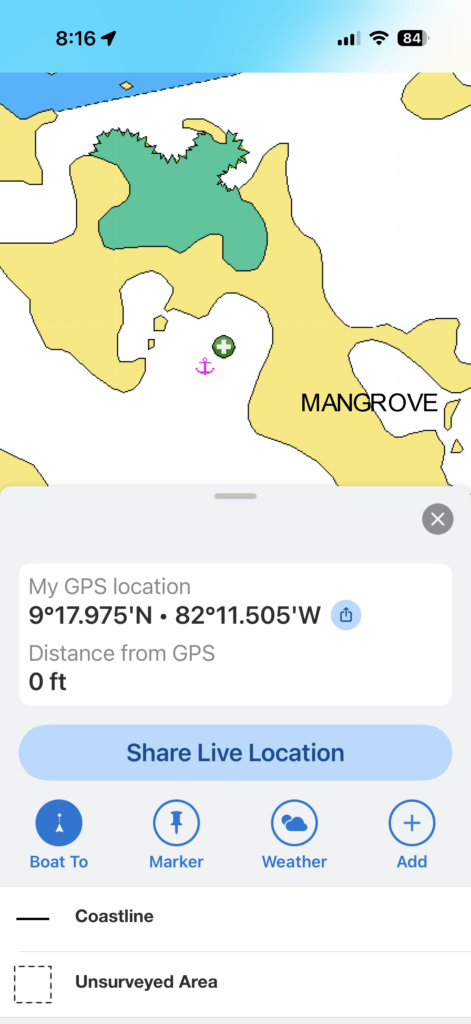
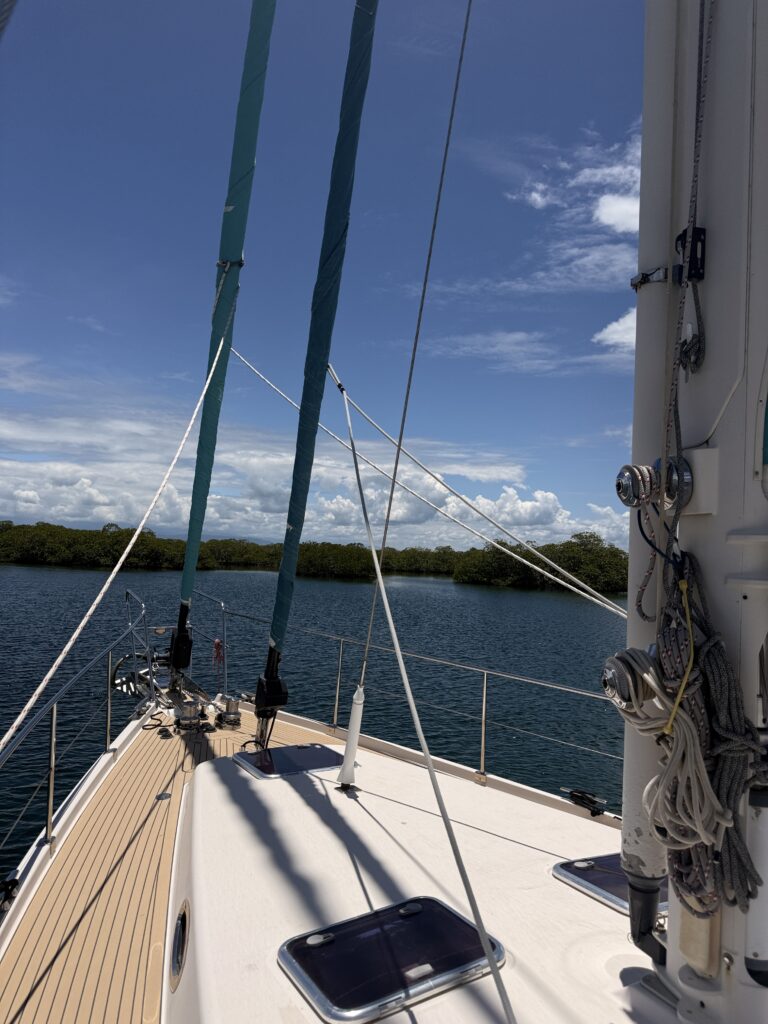
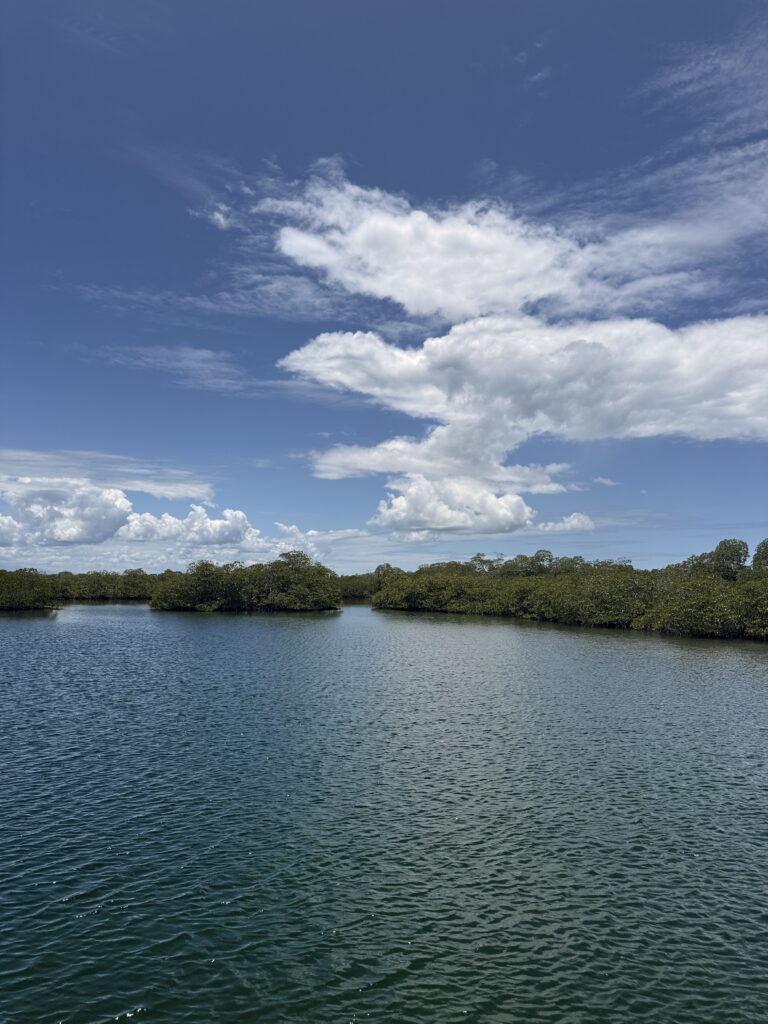
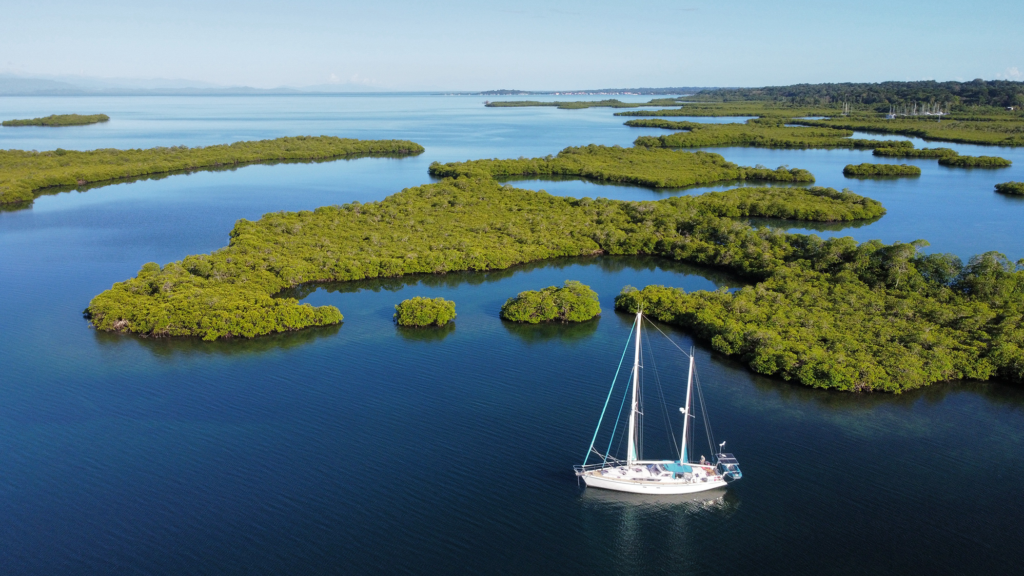
We are taking our time to meander to different anchorages in this wonderful region of mangrove clusters dotted along the shores of the Cayo Nancy and Cayo Gallego in the Bocas del Toro archipelago. The last few days have blessed us with abundant sunshine, slight breezes, and crystal water. Our routine is to scout along through the mangrove outcroppings, taking Galini in through the narrow channels of 8 – 15m to find anchoring holes nestled amongst the mangroves close to the promising snorkeling grounds. We’ve been relying heavily on the cruising guide written by Eric Bauhaus (last published in 2015), complete with drone and satellite images. He personally took thousands of soundings over the years he lived here and drew charts to accompany the images. It is still quite accurate. That volume, combined with Galini’s forward looking sonar guides us as we venture into the numerous nooks ripe for exploration. Typically, following breakfast, we have been taking the dingy to discover these fantastic snorkeling spots with shallow reefs that extend in all directions. Yesterday, Ken took a nice drone image of Galini at anchor amonst the mangroves.
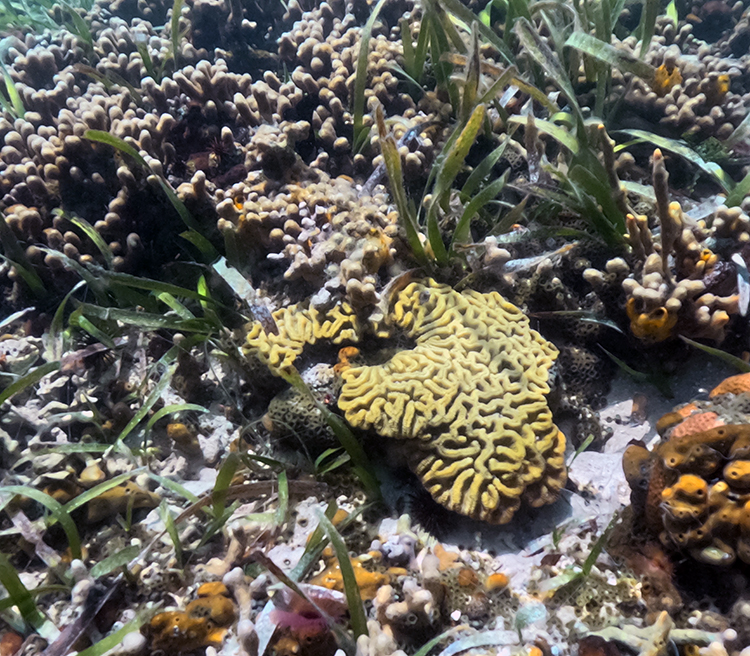
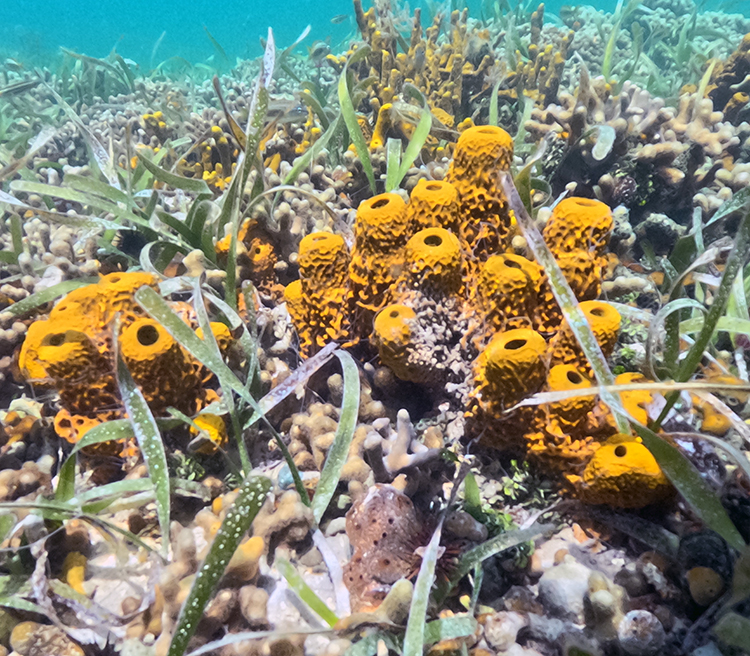
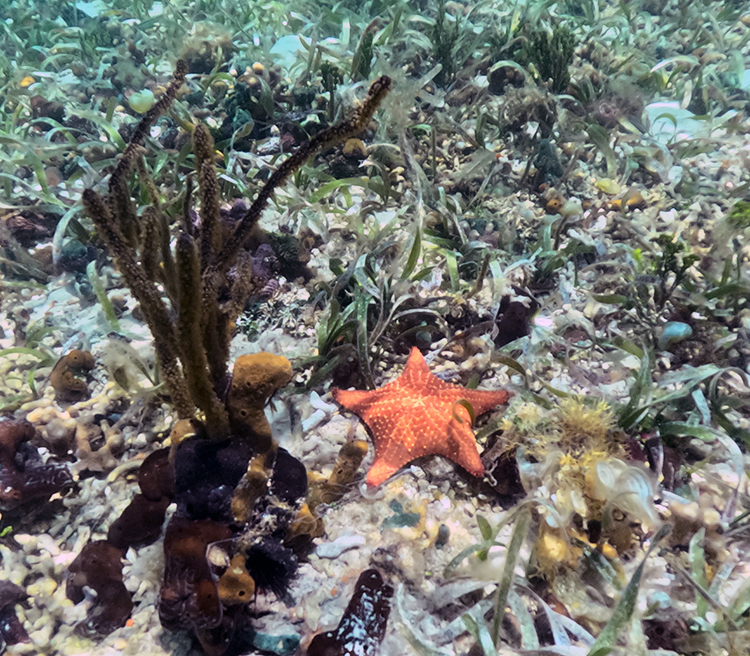
The water is stunningly clear and the reefs are teaming with juvenile coral, sponges, and worms of many types. It is so refreshing to see young coral thriving in these waters! Among the most abundant are elk and staghorn, fire, pillar, lettuce, brain, finger and star coral, with fewer sea fans and whips. Urchins and sea stars abound here, in a rainbow of hues, along with cucumbers, molluscs, and delicate tube worms. One beautiful specimen is the feather duster worm (Sabellidae). These worms are filter feeders and feature a prominent feather crown of radioles (branchiae) that functions for both feeding and respiration. The radioles are filled with eye spots that when activated, elicit a protective reflex where the crown very rapidly. retracts into the proteinaceous tube stalk.
Reef fish in the shallow waters are generally small, as the larger coral heads are not as abundant here, but some really interesting varieties have been spotted. Plentiful are the butterfly fish, angels, trigger, and surgeon fish, with less frequent parrotfish, snapper, jacks, barracuda, and puffers. A new one for me, was the sighting of a scrawled cowfish, a boxy fish, similar to a puffer, that initially had a greenish body with spottled blue swatches and two prominent protruding horns, one just above each eye that extend anteriorly toward the nose. These cowfish are slow swimmers and I followed one for some time as he traversed close to the bottom, where I witnessed the amazing camouflage ability these animals possess. As the cowfish moved across the sea floor over brownish lettuce corrals then onto white sand patches peppered with sea grass, the animal’s body change color from a green to a white and the blue scrawls in the skin would shrink and darken. I saw this occur several times, but alas, my gopro battery was empty so I was unable to video the process. Truly an amazing behavior I hope to capture in a future sighting.
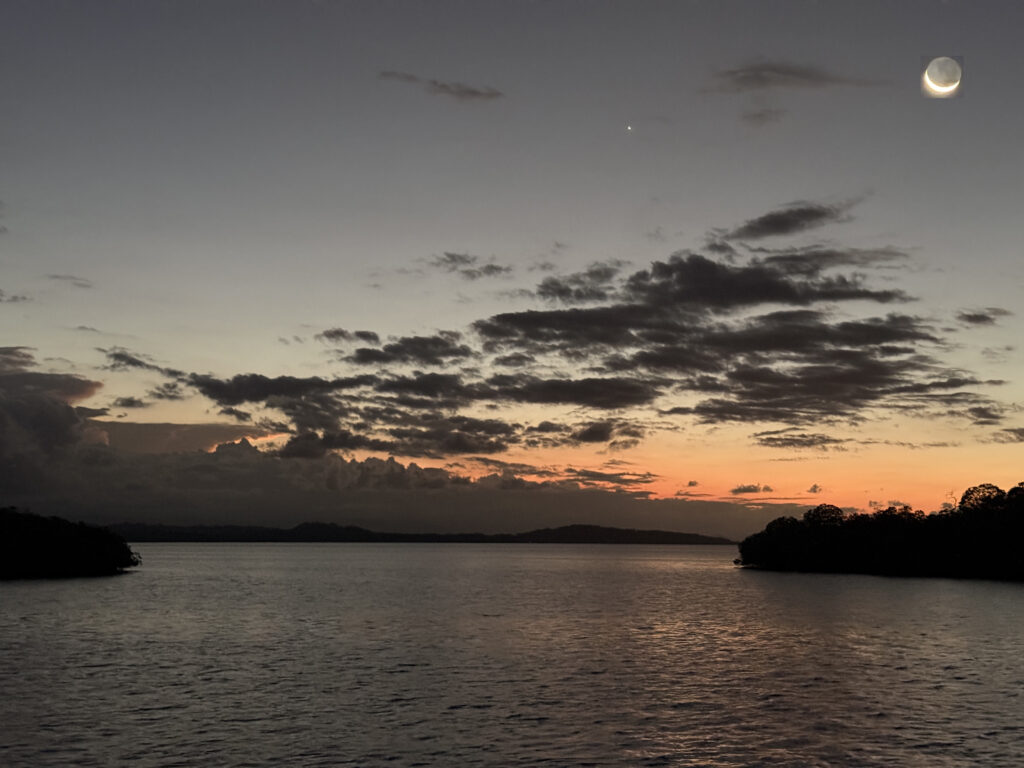
Following our lovely days of snorkeling, we have been treated to wonderful dinners ala Sandra, then retire to star gazing, reading, and story telling. These recent days we have witnessed early setting crescent moons, with brilliant Venus shining beneath low on the horizon and Jupiter higher above.
Thanks for the update, David! Beautiful there, Wow!