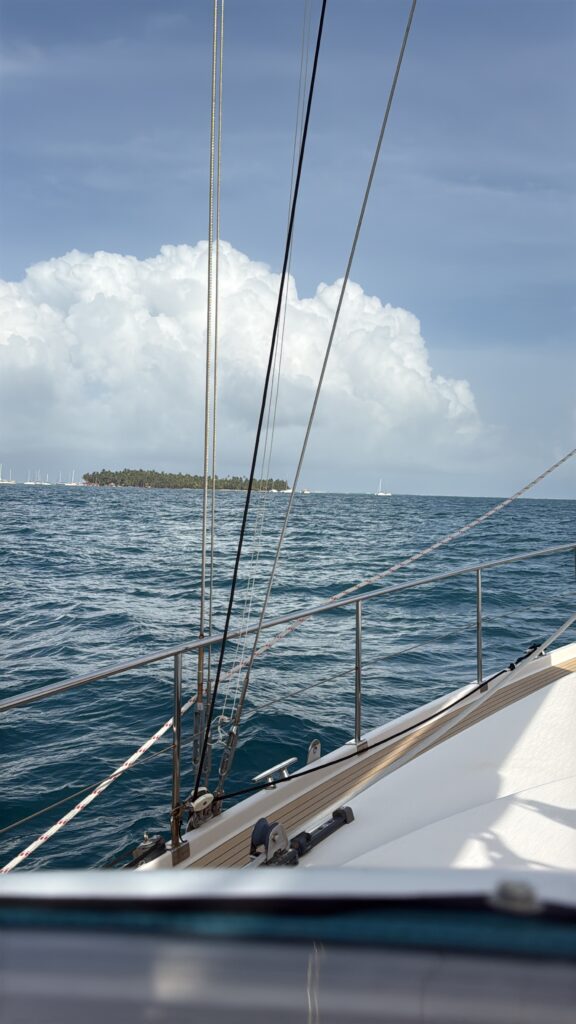
We spent that past two days traveling and then enjoying Chichime island in the Guna Yala (San Blas) archipelago. The sail from Portobello was brisk, with winds in the mid 20s and cloudy skies punctuated by bouts of rain, sometimes heavy. We left early, right at daybreak, in mist and low visbility trying to claw our way northward up the coast on a close tack and motorsail to get past the Punta Manzanillo. This stretch of water, between Colon and Isla Grande at the tip of Punta Manzanillo is known to be a difficult passage, with currents often crossways to the wind, dynamic shifts in direction, and rain squalls that are quick to rise. I have sailed both directions before, this being my forth, and it is always a passage to be respected. However, once we made the Punta to our lee, we changed course to due E, and loved the broad reach that afforded, even with the rain mist and low visbility, as we now had both wind and current in our favor pushing us toward the Punta San Blas.
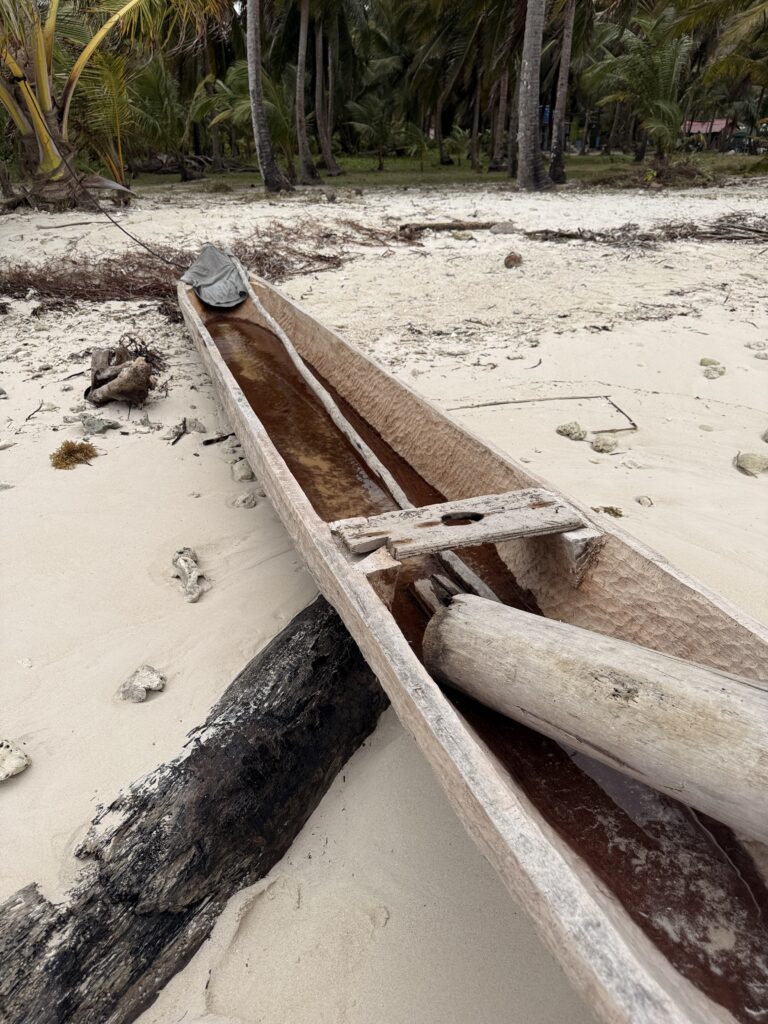
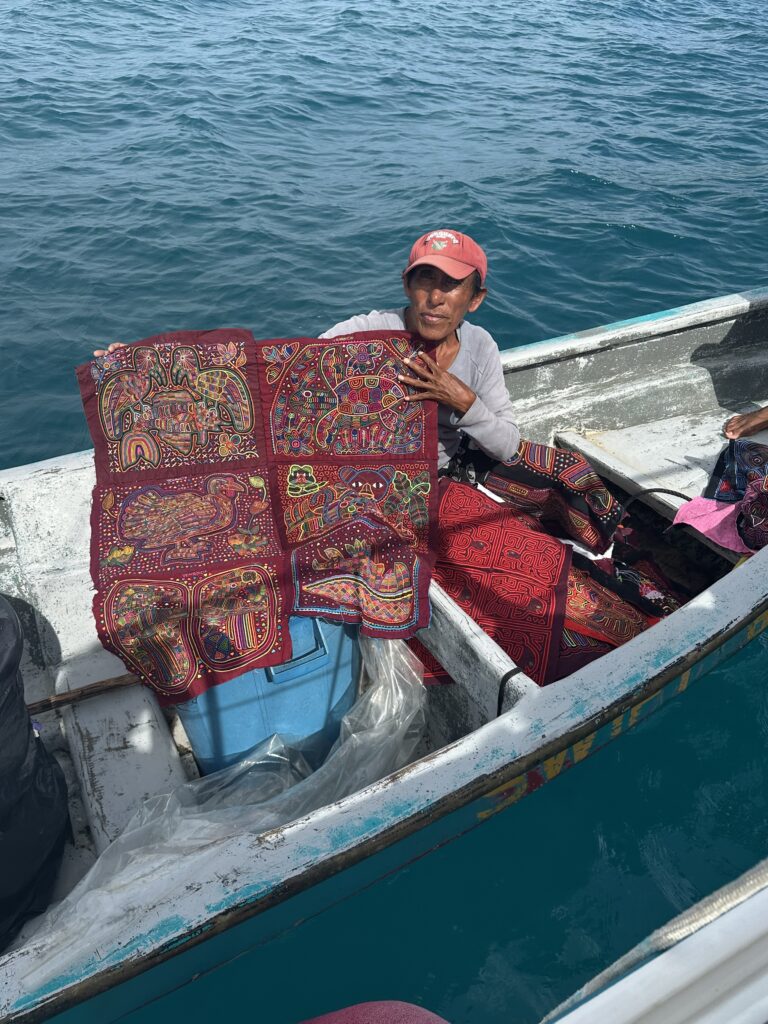
Out first stop, around 1630, was Chichime, with it’s easy approach and broad bay to the south side of the narrow strip of island. We anchored in 18m of water with a 4:1 scope and blowing winds and rain, shared only by four other boats to our west. There is a narrow strip of anchorage close in to the west of the island, but it was full of larger 60ft vessels, all part of the Oyster rally fleet, enjoying some last days before they cross through the Panama canal on their continued round-the-world organized rally. We dropped the dingy, but then were visited by a local Guna tradesman selling Molas. He and his shipmate tied up to our port side and began to display beautiful designed, hand stitched, molas with motifs of birds and other animals, people, sailing vessels, and island locales embroidered along the face. We watched as he patiently displayed his wares and picked out a few for keepsakes. I am amazed at the skilled seamanship of these people, little dugout canoes, some larger tenders, some with engines, but many not. Often I’ve seen a single person, usually a male, paddling with a single home made oar off the stern, while 2, 3, or 4 people line the inside as the course through wave and wind like small floating wonders. Occaisionally, these pangas will be outfitted with a single gaff sail, make of hand stitched cloth on a wooden mast that is made fast by a hole drilled via burning pointed spear through a flat board that dovetails to a stringer on the sides of the canoe. Beautiful work.
After our shopping, we decided to wait until the next day go ashore, as dusk was approaching. Instead, we prepared a nice dinner of Bokchoi stir fry, with mushrooms, onions, garlic, soy, and pork in a sesame sauce. That evening, we sat in the cockpit and felt the rain come and go, with the Chichime bar seen in full swing: we could see it, but the wind was still near 20knts all night, so hearing the ruckus from our anchor spot was saved for a calmer future evening.
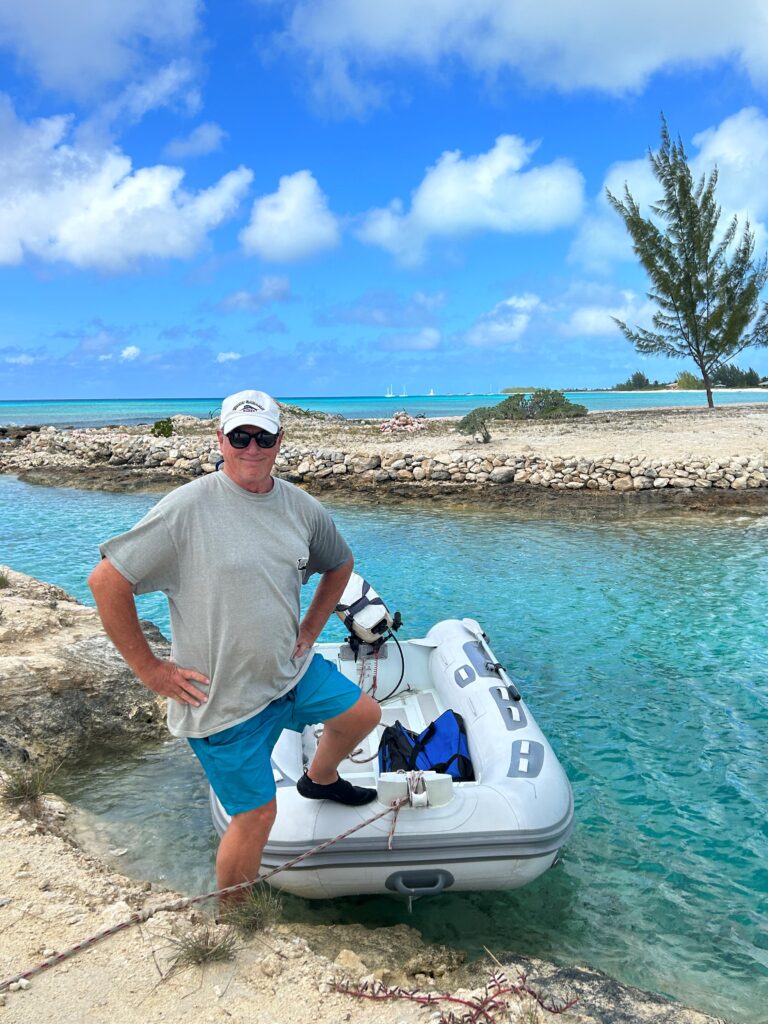
Next morning, following fresh hot coffee, scrambled eggs with paprika and cheeze, bacon, cottage fries, and toast, we hopped into the dingy and went ashore for a nice walk and some beach time. Cloud cover was persistent however, although the rain had mostly subsided, so we settled for some walks and cool drink at the beach bar. Back on the boat, some small maintenance items were attended, followed by an easy dinner. Penne with tomato sauce and ground beef, but yours truly forgot to put in the ground beef, so we settled for sauce alone, fresh bread, and a nice luxurious salad prepared by Janet, dressed with olive oil and balsamic. Yum. With the rain ending, we settled into a restful evening, but the wind persisted through the night from the N, setting in large swells that filled the anchorage and set Galiini on a continuous side to side roll. Very unusual for these waters, as the Trade Winds are the matter of course for this time of year, always arising from the E or near NE. North winds are a rare occurrence, but that is what we slept with.